I have. Several times. Not scientifically, just out of curiosity. I did it when I was young, and I cannot honestly claim that I have not done it since passing the age of 50 either.
Through my interest in whisky, I have often discussed the influence of wood on the finished whisky with everyone from friends and distillers to even a couple of professors. But I have lacked a broader insight and understanding of the subject, and that has continued to fuel my curiosity.
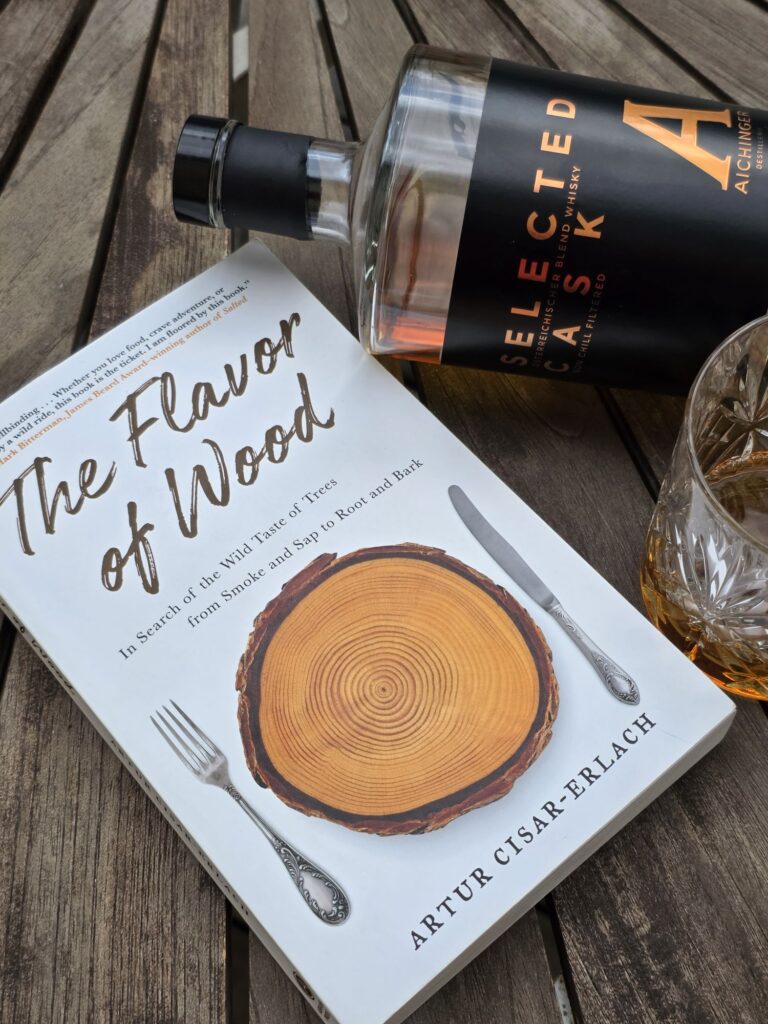
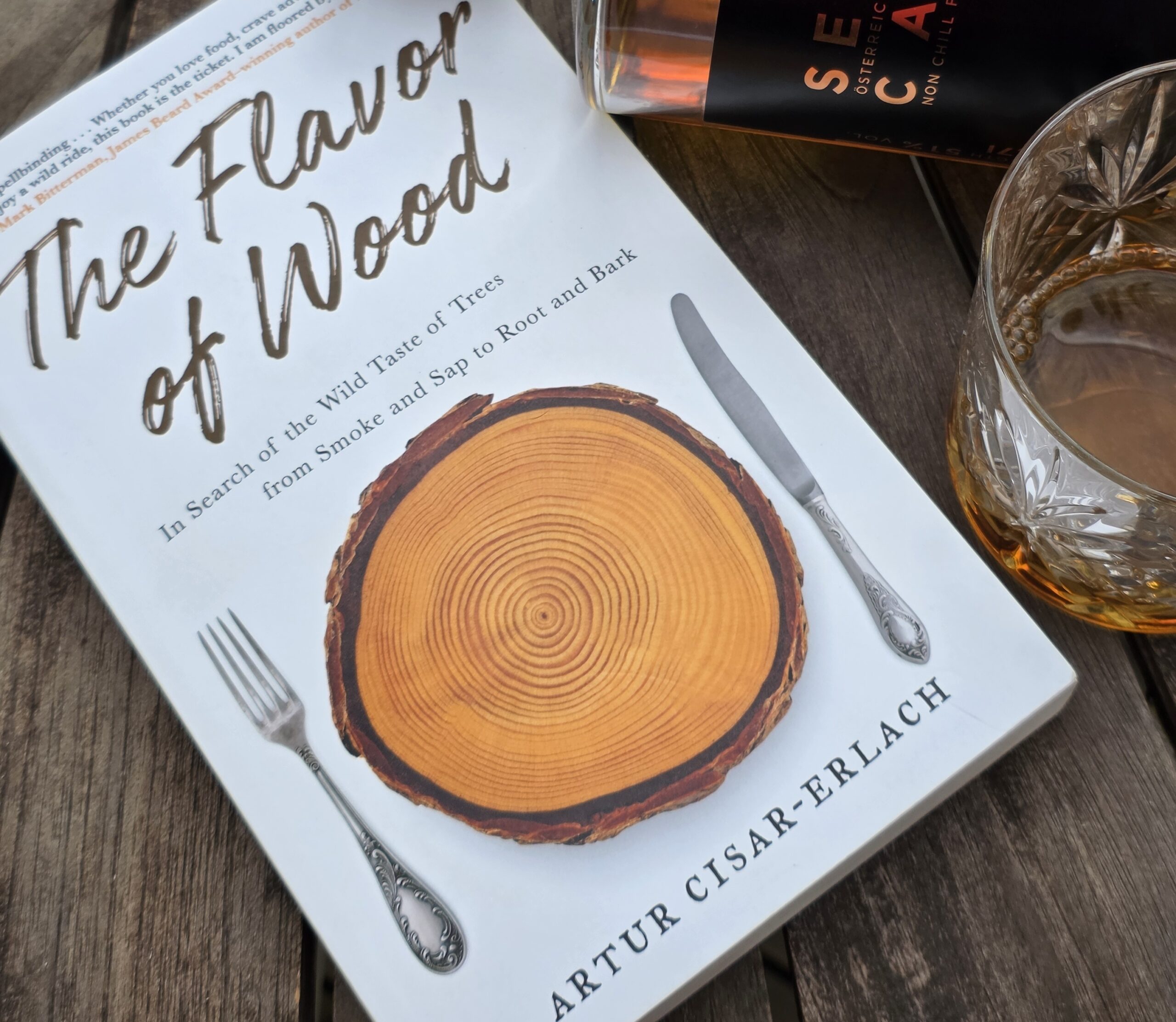
Then, quite by chance, I came across The Flavor of Wood – In Search of the Wild Taste of Trees, from Smoke and Sap to Root and Bark by Artur Cisar-Erlach.
I have never really written book reviews before, but there has to be a first time for everything. I have read many interesting books over the years, but when I started this one, several of my interests suddenly came together in an amusing way.
The introduction immediately caught my attention and created a sense of curiosity that is probably best described by the excitement of the question:
How on earth is he going to pull that off?
And just like that, I was hooked. Artur had set out to “interview a beaver about what wood tastes like.”
Artur Cisar-Erlach was born in Vienna and has an unusual professional background as a forest ecologist, cabinetmaker, food culture expert and author. It is precisely this combination of natural science, gastronomy and traditional craftsmanship that makes him so interesting. He views wood as a living organism, a physical material and a source of flavour.
With that background, the book never becomes dry academic reading. And do not misunderstand me: there are plenty of facts in the book. But you are also taken to places where history is allowed to unfold, and where the interaction between nature and human beings becomes clearly visible.
Among other things, we hear why some natural harbours provided excellent protection from attack but never developed into major cities because the infrastructure further inland was hopeless.
We are also taken to Naples to eat pizza and hear the story of why some of the best pizzas in the world are made there. You may already have guessed it, but wood plays an important role.
The wood used in the ovens comes from the Campania region surrounding Naples and is dried in precisely the right way. The bark is removed because it can create a turpentine-like flavour. The firewood must provide the intense heat needed to create the perfect pizza crust while also contributing the best possible smoky flavour.
The book takes us through everything from the significance of trees in different religions and the origins of the finest tea to the story of how the tea plant was smuggled out of China and planted in India.
Whisky and the use of wood during maturation are also explored from several different angles. Artur interviews a number of interesting people about the influence of wood on whisky and other spirits, and about how wood can be used deliberately to combine and develop flavours.
There is also an interesting element of the terroir debate. Here, naturally enough, the main focus is on the wood: how it is influenced by its surroundings and how it later passes some of that influence on through flavour.
In his search for the taste of wood, Artur also travels to Canada, where he explores maple syrup. It turns out to be an entire science in its own right and something that is greatly influenced by terroir.
And then there is his truffle hunt.
I have never really understood what all the fuss about truffles was about. But after reading the descriptions in the book, I have to admit that I have become fascinated. Not necessarily by the flavour, but by the almost sympathetic fungus itself and its enormous underground network.
It does not simply take from the tree. It forms part of a relationship in which the tree is also helped to absorb water and minerals. I find that absolutely fascinating.
I am slightly annoyed that I had not read the book before we went on a short holiday to Italy last autumn. Among other places, we visited Modena, where some of the finest balsamic vinegar in the world is produced.
To me, balsamic vinegar had mostly been something sticky made from vinegar and used in salads. But good grief, how ignorant I have been.
I should, of course, have visited an acetaia, where traditional balsamic vinegar is produced, while we were in Modena. There are different grades of balsamic vinegar, and the production methods, traditions and barrels can go back for generations.
Artur describes how producers use and combine different types of wood to create the flavour they want in the balsamic vinegar. He also writes about tasting balsamic vinegar that had matured for more than a hundred years in wooden barrels. That is something I will have to experience one day.
To prevent this from turning into an entire book about Artur’s book, I will try to limit my descriptions of the many chapters and places he visits.
But one thing is certain: this book takes you a long way.
You gain a remarkable insight into how wood works, how different types and species of trees influence our gastronomic world, how strong a tree really is, and the enormous impact trees have on our remarkable planet.
And all of it is presented in language that is easy to understand without becoming unnecessarily technical.
In Argentina, the Yacaratiá tree grows with an entirely different structure, allowing parts of the tree itself to be prepared and eaten. There are not many examples of this because the structure of wood cells cannot normally be broken down through cooking in the same way as the cells of other plants.
I must admit that I am also rather impressed by the determination and curiosity Artur Cisar-Erlach displays in his attempt to discover what wood tastes like.
At the same time, he explains the many different ways in which we use wood – as a material for construction and furniture, for storing food, and as a source of flavour in our food and drink.
For the whisky enthusiast, The Flavor of Wood is therefore far more than a book about barrels.
Artur explores not only what wood contributes to whisky during maturation, but also how the species of tree, its place of growth, drying, toasting and the barrel’s previous use can create widely differing aromas.
At the same time, he lifts his gaze beyond whisky production itself and places barrel maturation within a much broader story about the importance of wood in human food and drink culture.
So, if you are curious and would like to look beyond how an old oloroso sherry cask or a new American white oak cask affects the flavour of your whisky, I am fairly certain that this book will both entertain you and leave you considerably wiser.